
| Tel. | : +65 6970 5905 |
| Fax | : +65 6970 5906 |
| Mobile | : +65 9898 7781 |
| : hello@bjc.sg, drkevinkoo@bjc.sg |
| Tel. | : +65 6970 5905 |
| Fax | : +65 6970 5906 |
| Mobile | : +65 9898 7781 |
| : hello@bjc.sg, drkevinkoo@bjc.sg |
| Monday to Friday | : 8:30am to 5:30pm |
| Saturday & Sunday | : Closed |
| Public Holiday | : Closed |
Knee Arthroscopy in Singapore

Persistent knee symptoms can affect your mobility, activity level and overall quality of life. For some individuals, knee arthroscopy may form part of the treatment plan for conditions involving the meniscus, cartilage, ligaments or other structures within the knee.
Determining whether knee arthroscopy is appropriate begins with a thorough assessment. Dr Kevin Koo provides specialist evaluation and personalised care for patients considering knee arthroscopy in Singapore, helping them better understand their condition and available treatment options.
What Is Knee Arthroscopy?
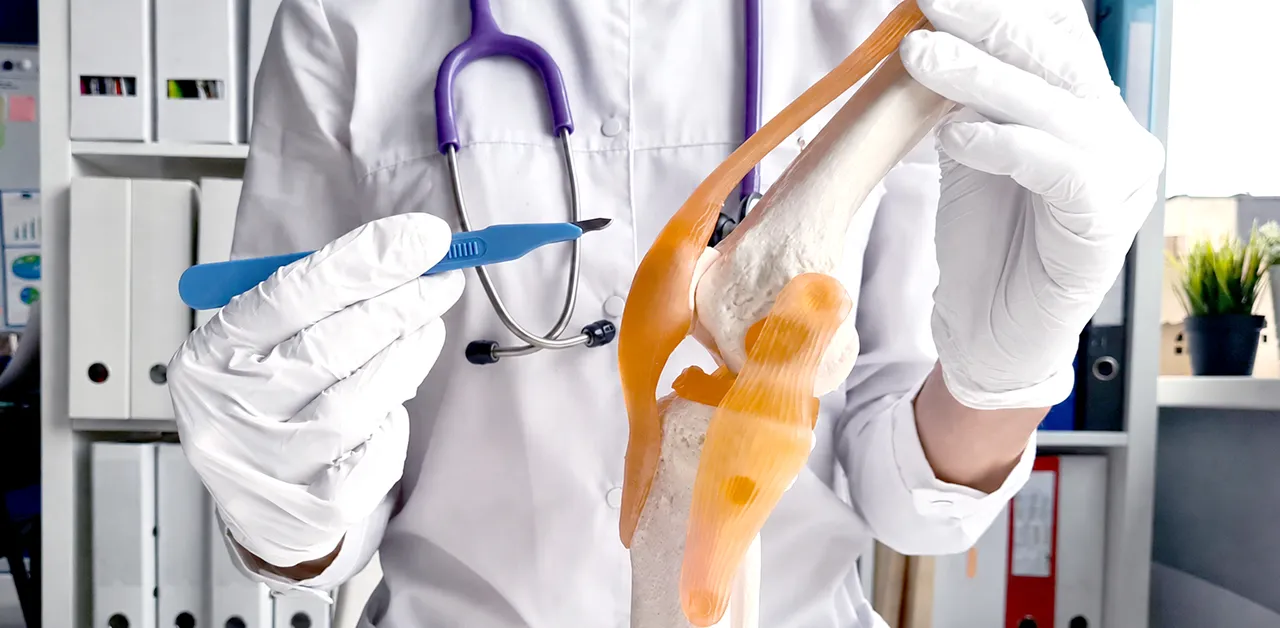
Knee arthroscopy is a minimally invasive surgical procedure that uses a small camera, known as an arthroscope, to examine the inside of the knee joint. Through small incisions, specialised instruments can be used to diagnose and treat certain conditions affecting the knee.
A knee arthroscopy specialist may recommend the procedure to assess and manage problems involving the meniscus, cartilage, ligaments and other structures within the joint. Compared to traditional open surgery, knee arthroscopy uses smaller incisions and may result in less disruption to surrounding tissues.
What Conditions Can Knee Arthroscopy Treat?
Knee arthroscopy may be recommended for certain knee conditions that cause pain, locking, instability or reduced function. Common conditions that may be assessed or treated using arthroscopic techniques include:
Meniscus Tears
: Meniscus tears affect the cartilage that cushions the knee joint and may cause pain, swelling, locking or instability.Cartilage Injuries
: Damage to the smooth cartilage lining the joint can affect movement and contribute to discomfort during activity.Loose Bodies
: Small fragments of bone or cartilage may become detached within the joint, causing catching, locking or restricted movement.Ligament Injuries
: Certain ligament injuries, including ACL tears, may be assessed or treated using arthroscopic techniques.Synovitis
: Inflammation of the joint lining can result in pain, swelling and stiffness within the knee.Kneecap Problems
: Conditions affecting kneecap tracking or alignment may contribute to pain and functional limitations.
What Are the Different Types of Knee Arthroscopy?
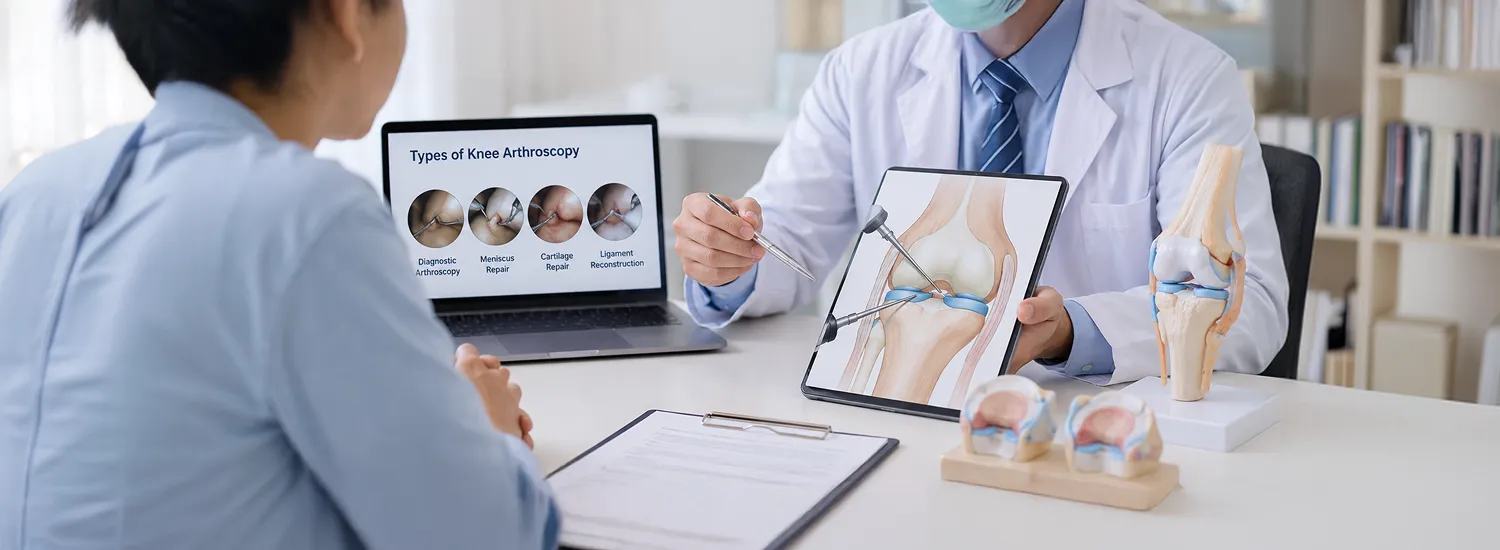
Knee arthroscopy can be used to perform a variety of procedures, depending on the location and nature of the knee problem. These may include:
Meniscectomy
: Removes damaged portions of a torn meniscus while preserving as much healthy tissue as possible.Meniscus Repair
: Repairs suitable meniscal tears to preserve the cushioning function of the meniscus.ACL Reconstruction
: Reconstructs a torn anterior cruciate ligament using a tendon graft to improve knee stability.Cartilage Restoration
: Addresses selected cartilage defects to improve joint function and protect surrounding structures.Lateral Release Surgery
: Releases tight structures on the outer side of the kneecap to improve patellar alignment.Synovectomy
: Removes inflamed synovial tissue within the joint when appropriate.
Who Is a Suitable Candidate for Knee Arthroscopy?
Knee arthroscopy is not appropriate for every knee condition. A thorough assessment is required to determine whether the procedure may be beneficial.
You may be a suitable candidate if you:
- Have a meniscus tear confirmed by clinical assessment or imaging
- Experience knee locking, catching or instability
- Have cartilage injuries affecting knee function
- Have loose bodies within the joint
- Have persistent symptoms despite conservative treatment
- Require further evaluation of specific knee conditions
- Have ligament injuries that may benefit from arthroscopic management
What to Expect Before and After Knee Arthroscopy
Before Surgery
: You may undergo a physical examination, review of imaging studies and discussion of treatment options. Pre-operative instructions regarding medications, fasting and recovery planning will also be provided.After Surgery
: Following the procedure, patients are monitored before being discharged home, often on the same day. Recovery plans vary depending on the condition treated and may include physiotherapy, activity modification and follow-up appointments.
How Is Knee Arthroscopy Performed in Singapore?
The exact steps may vary depending on the condition being treated, but the procedure generally involves:
- Administration of anaesthesia
- Creation of small incisions around the knee
- Insertion of an arthroscope to visualise the joint
- Examination of the structures within the knee
- Treatment of the identified condition using specialised instruments
- Closure of the incisions and application of dressings
- Transfer to the recovery area for monitoring
What Are the Potential Benefits of Knee Arthroscopy?
Potential benefits vary depending on the underlying condition and individual circumstances. These may include:
- Smaller incisions compared to traditional open surgery
- Improved visualisation of structures within the knee
- Treatment of selected knee conditions through minimally invasive techniques
- Relief of symptoms such as locking or catching in suitable cases
- Improved knee function and mobility for selected patients
- Reduced disruption to surrounding tissues compared to some open procedures
What Are Potential Risks of Knee Arthroscopy?
While knee arthroscopy is generally considered safe, all surgical procedures carry potential risks. However, this is minimal when in the hands of an experienced surgeon. Your medical team will also work to ensure that all risks and possible issues are promptly and thoroughly addressed.
Infection
: Infection may occur at the incision sites or within the joint, although this is uncommon.Bleeding
: Minor bleeding or bruising may occur following surgery.Blood Clots
: Blood clots can occasionally develop in the legs after lower limb surgery.Persistent Pain or Swelling
: Some patients may continue to experience symptoms despite treatment.Stiffness of the Knee
: Temporary or persistent stiffness may occur during recovery.Nerve or Blood Vessel Injury
: Injury to nearby nerves or blood vessels is uncommon but possible.Reaction to Anaesthesia
: As with any procedure requiring anaesthesia, adverse reactions may occur in rare cases.
Why Choose Our Knee Arthroscopy Clinic in Singapore
- Over 20 years of specialist experience
- Fellowship-trained orthopaedic surgeon
- Expertise in minimally invasive knee procedures
- Experience managing sports injuries and knee disorders
- Personalised treatment plans tailored to individual needs
At The Bone and Joint Centre in Singapore, patients receive personalised orthopaedic care for a wide range of knee conditions. Under the care of Dr Kevin Koo, treatment recommendations are guided by a thorough assessment and tailored to each patient's individual needs.
If persistent knee symptoms are affecting your mobility or quality of life, call 9898 7781 or send us an enquiry to schedule a consultation.
Frequently Asked Questions (FAQs) About Knee Arthroscopy
Is knee arthroscopy suitable for all knee pain?
No. Knee arthroscopy is only appropriate for selected conditions. Some causes of knee pain, such as advanced osteoarthritis, may not benefit from arthroscopic treatment. A clinical assessment is needed to determine whether arthroscopy is likely to be helpful for your specific condition.
Will I need physiotherapy after knee arthroscopy?
Many patients are advised to undergo physiotherapy following knee arthroscopy. Rehabilitation can help restore movement, improve strength and support a safe return to daily activities. The extent of physiotherapy required depends on the procedure performed and your recovery goals.
Can I walk after knee arthroscopy?
Many patients are able to walk shortly after knee arthroscopy, although this depends on the condition treated and the procedure performed. Some individuals may require crutches or temporary activity restrictions during the early stages of recovery.
Will I have visible scars after knee arthroscopy surgery?
Knee arthroscopy is performed through small incisions, which typically result in smaller scars compared to traditional open surgery. While scars usually fade over time, their appearance can vary depending on individual healing and the procedure performed.
Can knee arthroscopy prevent knee replacement surgery?
Knee arthroscopy is not intended to replace knee replacement surgery. However, in selected cases involving meniscus tears, loose bodies or certain cartilage injuries, arthroscopic treatment may help address symptoms and improve function. Suitability depends on the underlying condition and degree of joint damage.
Meet Our Knee Arthroscopy Specialist in Singapore
Meet Our Doctor
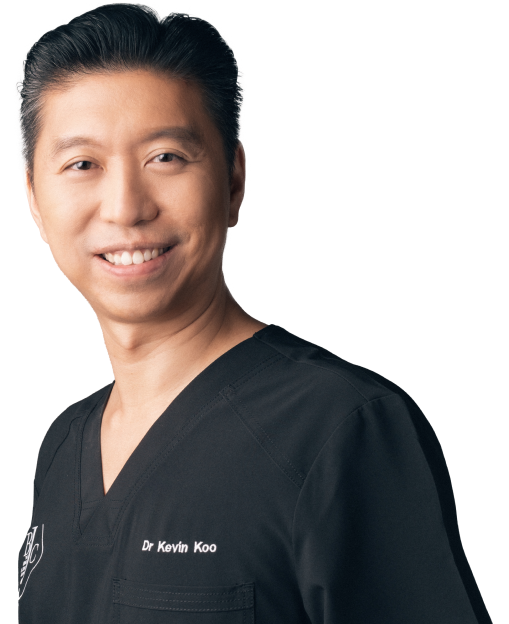
Dr Kevin Koo Oon Thien
FRCSEd (Orth), FAMS
Dr Kevin Koo is a fellowship-trained orthopaedic surgeon with over 20 years of experience in the diagnosis and treatment of knee conditions. His clinical practice includes arthroscopic management of meniscus tears, ligament injuries, cartilage damage and other disorders affecting knee function and mobility. Having completed advanced fellowship training in London, Dr Koo brings extensive experience in minimally invasive knee surgery and sports-related injuries.

| Tel. | : +65 6970 5905 |
| Fax | : +65 6970 5906 |
| Mobile | : +65 9898 7781 |
| : hello@bjc.sg , drkevinkoo@bjc.sg |
| Mon - FriMonday to Friday | :8:30am to 5:30pm |
| Sat, Sun and PHSaturday, Sunday & PH | :Closed |
Well-being: Our Focus at
The Bone & Joint Centre.
get in touch as soon as possible.


| Tel. | : +65 6970 5905 |
| Fax | : +65 6970 5906 |
| Mobile | : +65 9898 7781 |
| : hello@bjc.sg , drkevinkoo@bjc.sg |
| Mon - FriMonday to Friday | :8:30am to 5:30pm |
| Sat, Sun and PHSaturday, Sunday & PH | :Closed |